Wavelength for 5 Players: Setup, Roles, and Rules

Use cooperative play for an even five-person game, or agree on a 2v3 house format before you start.

Co-op setupFive-turn role cycle2v3 house rules

Wavelength for 5 players is easiest to run as one cooperative team: one Psychic gives a clue, four people agree on a position, and the role rotates after the reveal. The rulebook copy we checked says cooperative mode works well with two to five players. If your group wants a contest between teams, a 2v3 split is a practical house format, but it gives the larger side more voices and should be treated as an adaptation.

Choose the format before dealing cards. For a first session, use co-op and play five rounds so each person gives one clue. For a louder competitive night, keep teams fixed for an equal number of turns, rotate clue givers within each side, and accept that the teams are different sizes. This page focuses on a five-person setup rather than repeating the complete Wavelength rules or the separate four-player guide.
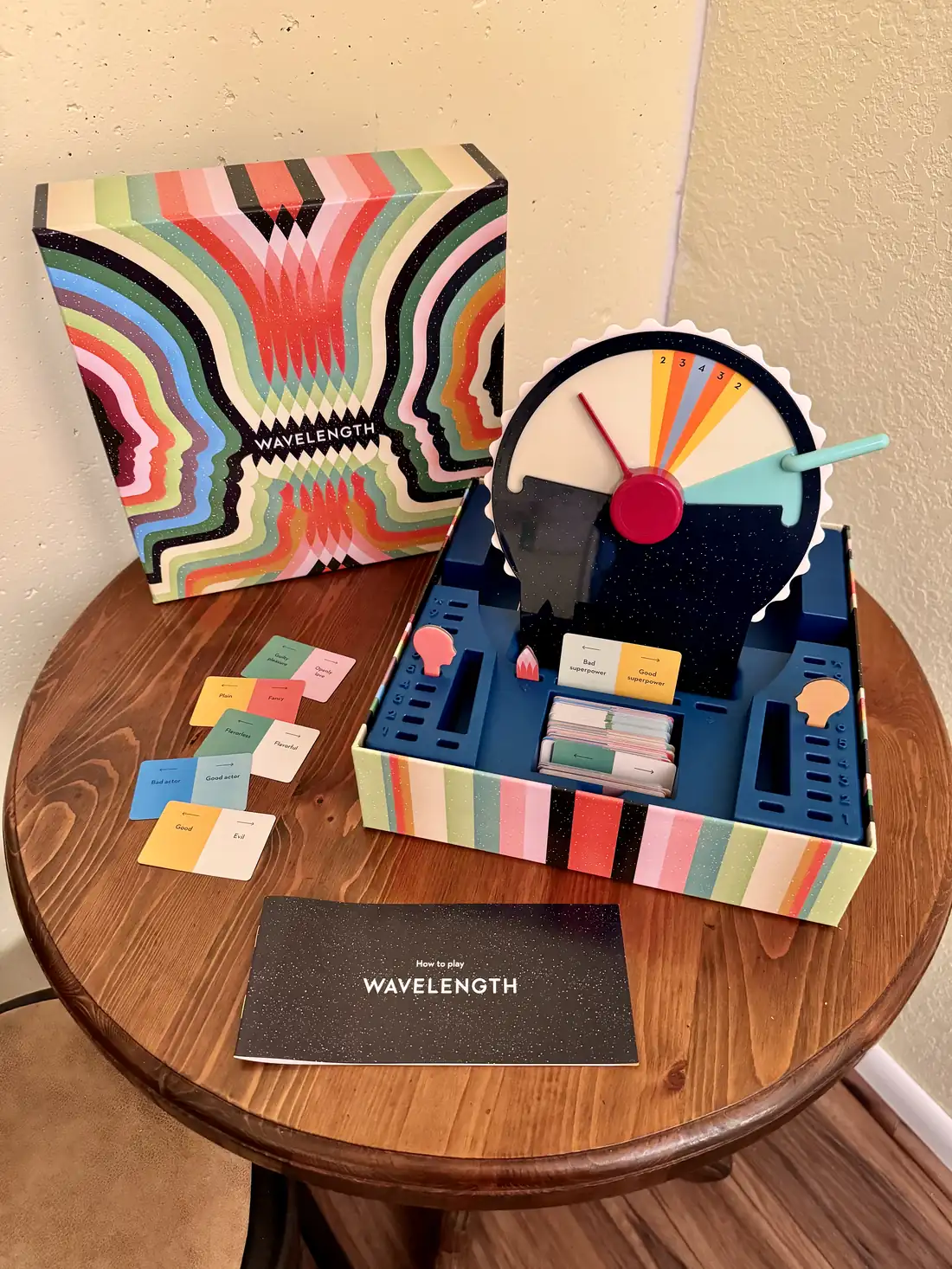
Physical Wavelength board game, spectrum wheel, cards, and box arranged on a table
The physical components stay the same; the five-player choice is how to organize clue giving and guessing.

Wavelength for 5 Players: Which Format Works Best?

Start with cooperative mode if everyone wants to join one conversation. It avoids an uneven team split and makes role rotation simple: the Psychic changes each round while the other four players build one shared guess. Five is within the rulebook's recommended two-to-five-player range for co-op.

Use 2v3 only if your group prefers team rivalry. The standard team rules can be adapted, but the rulebook does not describe a dedicated five-player 2v3 mode. Agree on turn length and scoring first. If the group is unsure, play co-op for one session and decide later whether competition would improve the game.

FormatHow five people take partBest whenTradeoff
Co-opOne Psychic; four people discuss one shared position.You want balanced participation and an easy first game.There is no opposing team.
2v3 house formatTwo teams alternate; one player gives each active team's clue.Your group wants rivalry and can keep turns concise.The larger side has more voices, so name a guesser and use a timer.

Set Up a Five-Player Cooperative Game

1
Pick the first Psychic
Choose a player for round one. Only that person looks at the hidden target.
2
Prepare the session
The rulebook's co-op format starts with seven random wavelength cards.
3
Give one clue
The Psychic gives one clue that fits between the spectrum's two ends, then stops communicating.
4
Agree on one guess
The other four compare interpretations and settle on one dial position before the reveal.
5
Reveal and rotate
Record the shared points and make the next person Psychic.

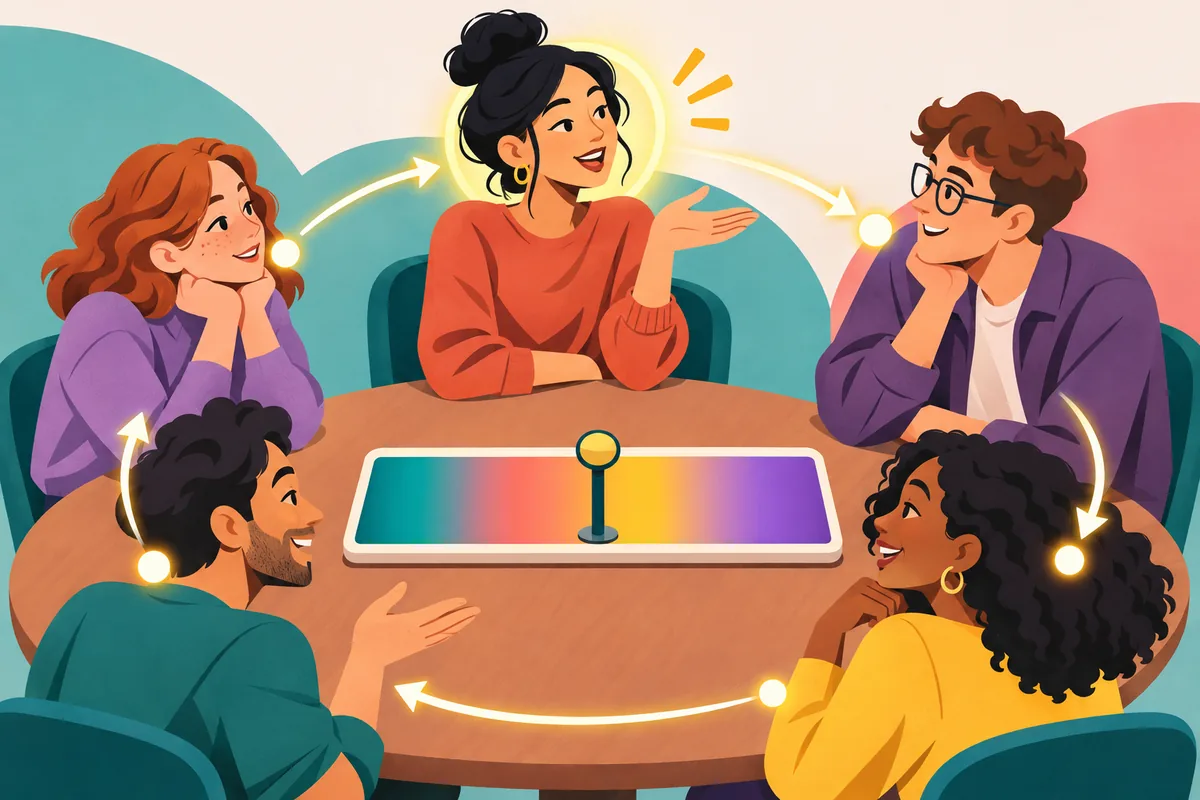
A five-round rotation gives everyone one clue-giving turn. Keep the order written down or move clockwise around the table; do not let the most confident player volunteer every round. The Psychic should not point at the spectrum, react to a proposed answer, or add another clue after the discussion begins.

Illustrative five-person Wavelength table scene showing the clue-giving role moving around the group
Illustrative role rotation: pass the Psychic role after every reveal. This artwork is explanatory, not an official game-board diagram.

Wavelength for 5 Players: Co-op Cards, Scoring, and Session Length

In the cooperative rules we reviewed, the group starts with seven randomly selected cards and the session ends when that stack is used. Scoring follows the familiar target zones, with an important change: the center wedge is worth three points in co-op, and hitting it adds another card to the session. The extra card rewards a precise shared guess with another round instead of ending play early.

Use the scoring chart included with your edition. The rulebook presents the co-op total as a playful performance scale, not a head-to-head win condition. Five players share one score; there is no need to compare individual guesses or give the Psychic a separate total.

Co-op resultRulebook ratingPractical response
0-3 points“Are you sure it's plugged in?”Use it as a warm-up, then compare how players read the clue.
4-6 points“Try turning it off and back on again”Check that the group agreed on what the two ends mean.
7-9 points“Blow into the bottom of the device”Keep the joke in context; it is part of the game's rating chart.
10-15 pointsFrom “Not bad” to “So close”Keep the same rotation for the next session.
16-24 pointsWin, same wavelength, or “Galaxy brain”Celebrate the shared result, not an individual player's score.
25+ pointsTop rating on the chartRemember that bonus cards may make the session longer.

When you organize Wavelength for 5 players, decide before the first clue whether you are stopping after five turns or playing until the cooperative cards run out. Five rounds are useful when everyone wants one turn as Psychic, but that is not the same as finishing the full co-op deck. The seven-card start and bonus-card rule can extend play.

A 2v3 Wavelength Setup for Five Players

For a competitive house format, split into a team of two and a team of three. Keep those sides fixed and alternate active teams. One player is Psychic on each turn; the rest of that team discusses the clue. If you are following standard team scoring, the opposing side makes the left-or-right guess. Treat this as an adaptation, not an official five-player mode.

The three-person side has more people to talk, so set a 45- to 60-second discussion limit and name one player to place the final guess. The Psychic stays quiet after giving the clue. On the two-person side, the non-Psychic teammate is the main guesser. These agreements keep the turn understandable without pretending both teams have the same number of voices.

House-rule choiceSuggested agreementWhy it helps
Team splitUse 2 versus 3 and keep sides unchanged for the session.Players know whose turn it is.
Turn countGive each team the same number of turns, such as four or five each.Equal attempts matter more than a fixed game length.
Clue giverRotate the Psychic within each team and write down the order.More players get to give clues.
DiscussionLet each teammate offer one reading, then have the named guesser lock the dial.The larger side does not dominate the round.
Illustrative comparison of five friends playing cooperatively and as two unequal house-rule teams
Illustrative comparison: cooperative play is the recommended even-group starting point; 2v3 is a house-rule option.

Equal team turns do not create equal Psychic turns per person because one side has fewer players. If personal role balance matters more than rivalry, use co-op or change team membership between separate games. Pick 2v3 because your group likes the competition, not because it is mathematically the same as 2v2.

Example: Five Players Finish One Co-op Round

Suppose Maya is Psychic and sees a target closer to the “great” end of a scale from bad picnic food to great picnic food. She says “cold pizza.” The other four players do not ask for clarification. One pictures leftover slices from a favorite restaurant; another thinks of soggy pizza packed for lunch. They compare those examples, agree that the clue belongs above the midpoint, and lock the dial before the target is revealed.

After the reveal, the group records its shared points and briefly names what made the clue land where it did. Maya passes the Psychic role to the next person. If the guess hits the center in co-op, use the rulebook's three-point center value and add a card to the remaining stack. The next player starts a fresh clue rather than extending the previous debate.

This example is not a scoring guarantee; the group's associations decide where “cold pizza” belongs. A good five-player session makes different readings part of the conversation while keeping one final answer for each round.

Remote Play and Common Five-Player Problems

For a video call, have one person host the board and keep the target private before sharing the screen. The Psychic can inspect the target off-screen, then share the covered board after giving the clue. The other four players discuss over voice chat and name one person to report the agreed position. You can also start from the online Wavelength game, but agree how the host will prevent the target from being spoiled.

One person answers every clue. Rotate the Psychic and let each guesser offer a first reading before the group decides.

The Psychic keeps clarifying. After the clue, the Psychic stays silent. Extra hints change the challenge and make the reveal less informative.

The 2v3 side debates too long. Use a timer and a named guesser. Do not give the smaller team extra turns unless everyone agreed before play.

Players mix modes or scores. Follow the scoring printed for your physical copy or online board. Do not combine the co-op chart with competitive points midway through a game.

For adjacent group sizes, see the three-player rotation guide and four-player 2v2 setup. The strategy guide covers clue reading, and the Wavelength prompts collection can help you choose a spectrum everyone understands.

Wavelength for 5 Players FAQ

Can five people play Wavelength?
Yes. The rulebook copy we checked says cooperative mode works well with two to five players. A five-person group can also adapt the two-team format as a 2v3 house rule.
What is the best Wavelength setup for five players?
When hosting Wavelength for 5 players, co-op is the simplest default: one Psychic gives a clue, four people agree on one guess, and the role rotates after each reveal.
Can you play Wavelength with teams of two and three?
You can use a 2v3 split as a house format. Keep team turns equal, rotate the Psychic, limit discussion time, and name the final guesser on the larger side.
How many rounds should five players play?
Play five rounds if everyone should give one clue. The cooperative session starts with seven cards and can gain bonus cards after a center result, so it may run longer.
How does Wavelength co-op scoring work with five people?
The group shares one score. In the rules we reviewed, the center wedge is worth three points and adds a card; use the scoring chart included with your edition.

Ready for a Five-Player Round?

Choose co-op for an even start, rotate the Psychic, and agree on scoring before the first clue.

Rules reference: Wavelength rulebook copy hosted by North Street Games. Cooperative player-count and scoring details can vary by edition; check the rule sheet included with your copy.