Funny Adult Wavelength Categories: 60+ Party Prompts
Playful, fictional, low-pressure spectrum themes for adult game nights, couples, and friends who want more than generic small talk.
60+ CategoriesFictional ScenariosSkip-FriendlyOnline or Tabletop
What Are Funny Adult Wavelength Categories?
Funny adult Wavelength categories are spectrum themes built around grown-up life, social habits, dating situations, pop-culture opinions, work, money, and harmless “what would you do?” debates. The best ones stay fictional and leave room for a genuine middle: not simply good or bad, but somewhere between ordinary and outrageous.
Use each pair as the left and right ends of the dial. The Psychic sees the hidden target, gives one clue, and lets the group decide where that clue belongs. These categories are written for adults, but they do not require explicit details or personal confessions. If a prompt feels too close to real life, skip it without explanation and choose another.
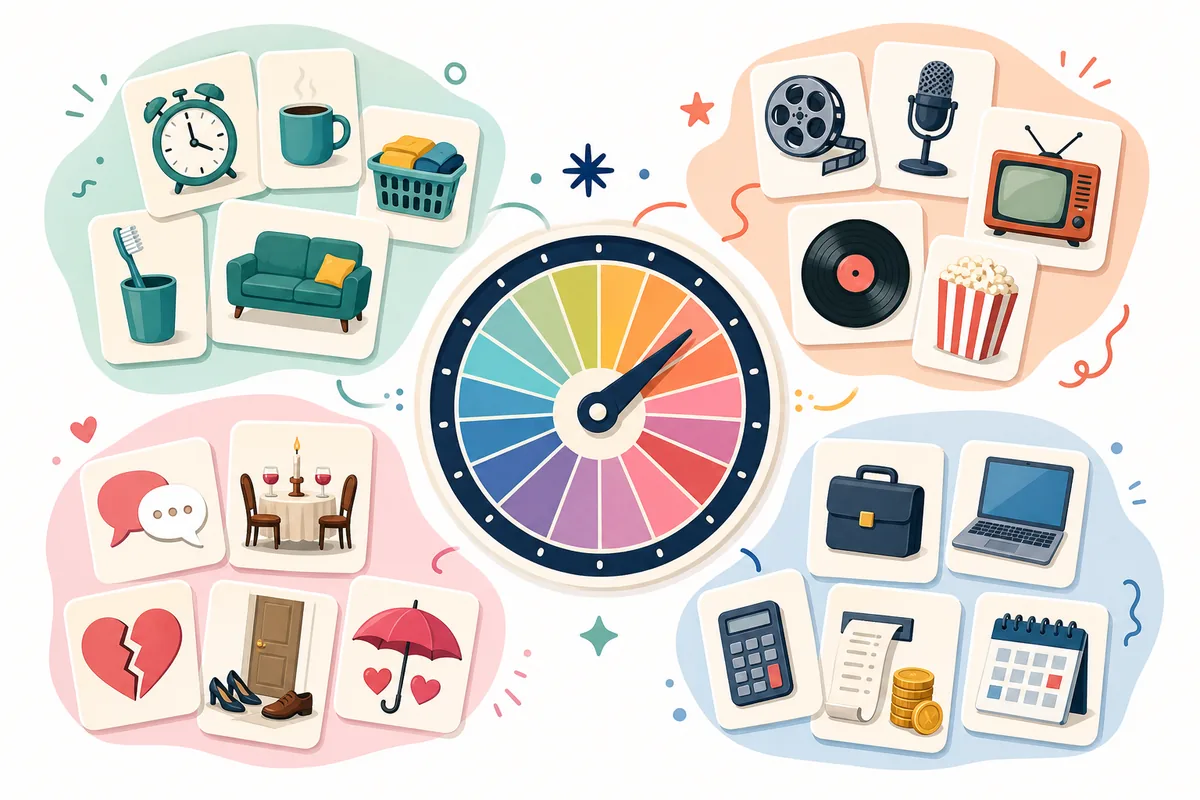
Editorial concept illustration of an adult party-game discussion; it is not an official Wavelength product screenshot.
Quick hosting rule: choose fictional examples, avoid naming real partners or coworkers, and say before the first round that anyone can pass. The goal is a funny disagreement about the spectrum, not a test of someone's private life.
How to Choose a Good Adult Category
A category works when players can imagine examples at roughly 20%, 50%, and 80% of the scale. “Boring to exciting” is easy to play, but it is not very adult-specific. “Normal date idea to unforgettable date idea” gives the table a more interesting middle while staying open to different experiences.
Check
Playable version
Weak version
Clear ends
Polite disagreement ↔ dramatic overreaction
Kind of funny ↔ very funny
Debatable middle
Casual date ↔ date you tell friends about
Not a date ↔ definitely a date
Room-safe framing
Fictional character makes a suspicious choice
Which person here is untrustworthy?
Useful clue range
A clue can land low, middle, or high
Every clue obviously belongs at one end
Pick a category family that matches the room: everyday habits, pop culture, relationships, or adulting and work.
60 Funny Adult Wavelength Categories
Read the ends aloud, then choose a clue that could reasonably land anywhere along the line. The examples below are starting points, not fixed answers. Let the group explain why a clue feels low, middle, or high before the guess is locked.
Everyday Adulting and Social Habits
01Leaving dishes “to soak” ↔ Hosting a spotless dinner
02Quick grocery trip ↔ Accidental weekly restock
03One alarm ↔ A full negotiation with the snooze button
04Casual outfit ↔ Secretly dressed for attention
05Simple coffee order ↔ A drink with its own instruction manual
06Small favor ↔ The favor becomes a side quest
07Reasonable bedtime ↔ “One more episode” at sunrise
08Polite small talk ↔ Adopting a stranger as a new friend
09Neat calendar ↔ Color-coded life command center
10Quiet weekend ↔ Three plans and a recovery day
Dating and Relationship Scenarios
11Thoughtful text ↔ A message that needs a committee
12Normal first date ↔ A story for the grandchildren
13Small romantic gesture ↔ A full production with a soundtrack
14Clear signal ↔ Requires a detective board
15Meet the friends ↔ Meet the entire social ecosystem
16Private joke ↔ A joke with its own expanded universe
17Healthy compromise ↔ Someone quietly becomes the villain
19Casual anniversary plan ↔ A surprise with logistics
20Minor misunderstanding ↔ Season finale argument
Pop Culture, Taste, and Hot Takes
21Background movie ↔ Mandatory group screening
22Catchy song ↔ Cannot hear it without dancing
23Harmless spoiler ↔ Friendship-ending reveal
24Comfort show ↔ Entire personality
25Interesting opinion ↔ Comment-section emergency
26Normal fan ↔ Has a spreadsheet
27Good costume ↔ Everyone remembers it next year
28Fun sing-along ↔ One-person world tour
29Acceptable remake ↔ Cultural crime
30Casual recommendation ↔ Recruiting for a fandom
Work, Money, and Adult Responsibilities
31Productive meeting ↔ Calendar hostage situation
32Reasonable budget ↔ A spreadsheet with feelings
33Helpful coworker ↔ Office legend
34Small work win ↔ Updates the professional profile
35Normal email ↔ A message that changes the week
36Quick errand ↔ A full administrative campaign
37Useful purchase ↔ An object with a five-minute origin story
38Minor inconvenience ↔ Calls customer support immediately
39Reasonable side project ↔ Second unpaid career
40Early planner ↔ Has already planned the backup plan
Party, Travel, and Harmless Risk
41Spontaneous plan ↔ Needs a shared document
42Normal vacation ↔ Personal documentary
43One drink too many ↔ Becomes the event mascot
44Friendly dare ↔ A challenge with a safety briefing
45Late arrival ↔ Makes an entrance
46Small party ↔ The neighbors know everyone
47Tourist mistake ↔ New local tradition
48Good karaoke choice ↔ A performance review is required
49Reasonable group chat ↔ Twenty-seven notifications before breakfast
50Fun surprise ↔ Needs a waiver and a snack break
Optional Spicy-but-Not-Explicit Themes
Use this final group only when everyone has chosen that tone. Keep scenarios fictional, avoid private messages or real accusations, and give players an easy pass. For a narrower trust-and-boundaries deck, use the existing cheating or not cheating questions page instead.
51Flirty joke ↔ A message that changes the mood
52Questionable date choice ↔ Immediate exit strategy
53Playful secret ↔ A secret needs a meeting
54Low-stakes jealousy ↔ A relationship group chat
55Bold compliment ↔ A compliment with a legal disclaimer
56Awkward silence ↔ The silence becomes a character
57Harmless red flag ↔ Fictional villain behavior
58Too much information ↔ The host changes the subject
59Private joke in public ↔ Everyone needs the backstory
60Romantic gesture ↔ A gesture that needs a rehearsal
How to Host Adult Wavelength Rounds Safely
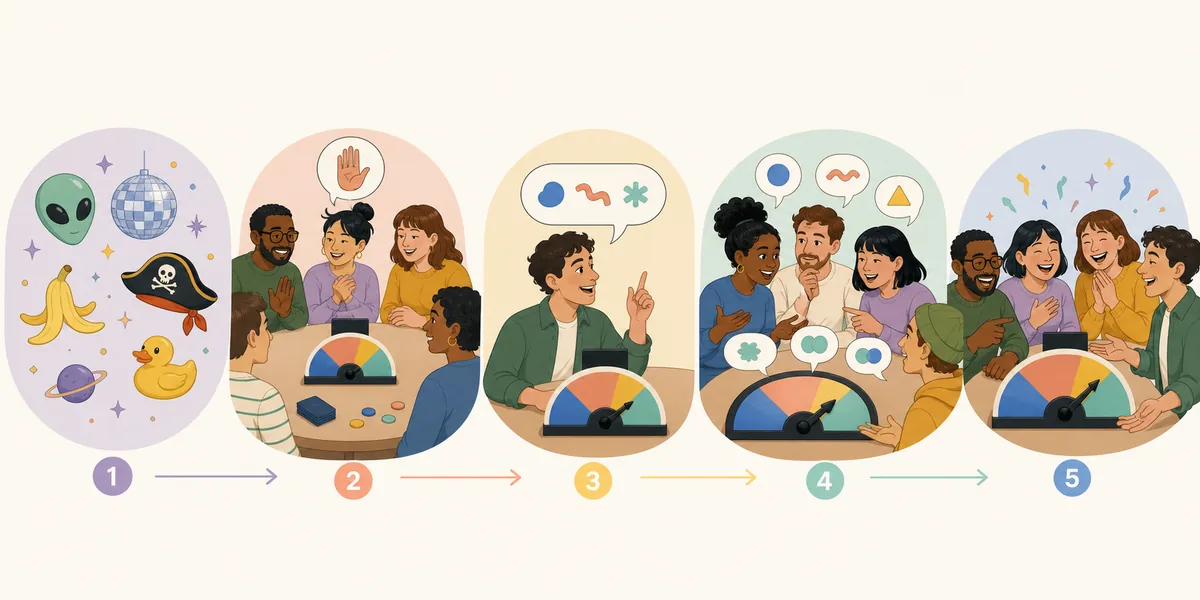
Adult does not have to mean explicit or uncomfortable. The strongest groups agree on the boundary before the first clue and treat passing as normal game control, not a dramatic interruption. A host can keep the round funny by choosing fictional characters, invented situations, and everyday adult problems rather than asking players to expose real relationship history.
1
Name the Tone
Say whether the room wants clean, cheeky, dating, work, or mixed adult themes.
2
Make It Fictional
Use imagined scenarios and characters. Do not turn a clue into a question about someone at the table.
3
Allow a Pass
Anyone can skip a prompt without explaining why. Keep a backup category ready.
4
Give One Clue
The Psychic gives one word or short phrase, then stays neutral while the team discusses.
5
Reveal and Reset
Reveal the target, laugh at the interpretation, and choose a fresh category for the next turn.
Editorial hosting illustration: choose a tone, keep the scenario fictional, discuss the clue, then reveal and reset.
Which Categories Fit Your Group?
Group
Start with
Use carefully
Close friends
Adulting, pop culture, harmless risk
Inside jokes that only one person understands
Couples
Fictional dating, taste, everyday habits
Real relationship disputes or scorekeeping after the game
Adult party
Party, travel, hot takes, optional spicy themes
Anything that pressures a quieter guest to disclose personal details
Mixed work group
Work, money, pop culture, clean adulting
Dating, drinking, private messages, or real coworker stories
Good adult categories use fictional everyday life, dating, pop culture, work, money, travel, or harmless risk. Choose spectrum ends with a debatable middle, such as “normal date idea” to “story for the grandchildren.”
Are these adult Wavelength prompts explicit?
No. Most are playful adult-life and party themes. The optional spicy section stays non-explicit, and the host should skip anything that does not fit the group.
Can couples use adult Wavelength categories?
Yes, when both people agree on the tone. Fictional dating and relationship scenarios are safer than asking either person to judge a real disagreement or reveal a private story.
How do I keep adult Wavelength questions comfortable?
Set the boundary before the game, use fictional examples, allow a no-explanation pass, and keep a clean backup category ready. A prompt should create debate, not pressure.
Can I play these categories online?
Yes. Open the online board, let the Psychic view the hidden target privately, read one category or clue, discuss the position, lock the guess, and reveal the target.
What is the difference between a category and a prompt?
A category is the theme family, such as adulting or pop culture. A prompt is the playable spectrum pair inside it, such as “reasonable budget” to “spreadsheet with feelings.”