Wavelength Game Questions

120 ready-to-read questions, clue examples, and target-zone tips for better Wavelength rounds.

120 Questions Target Examples Host Scripts Party Ready
Fast answer: good Wavelength questions are short spectrum pairs that make a clue debatable, not obvious. Start with an axis such as harmless to unforgivable, boring to exciting, or overrated to underrated, then ask the Psychic to give one clue that fits the hidden target. The best questions have a clear left side, a clear right side, and a messy middle where the table can argue.

What Counts as a Wavelength Game Question?

A Wavelength game question is the playable idea that turns the dial into a conversation. Players often call these prompts, topics, categories, or question cards. In practice, the host needs two things: a left-to-right scale and a clue that can land somewhere on that scale. That is why "bad movie to great movie" is useful, while "Is this movie good?" is usually too flat.

This page is intentionally narrower than the full Wavelength prompts and categories list. Use that long list when you want hundreds of spectrum pairs. Use this page when you want a cleaner question pack: examples you can read aloud, target-zone guidance, and quick hosting rules that make each round easier to run. If your group has never played before, read the How to Play Wavelength guide first.

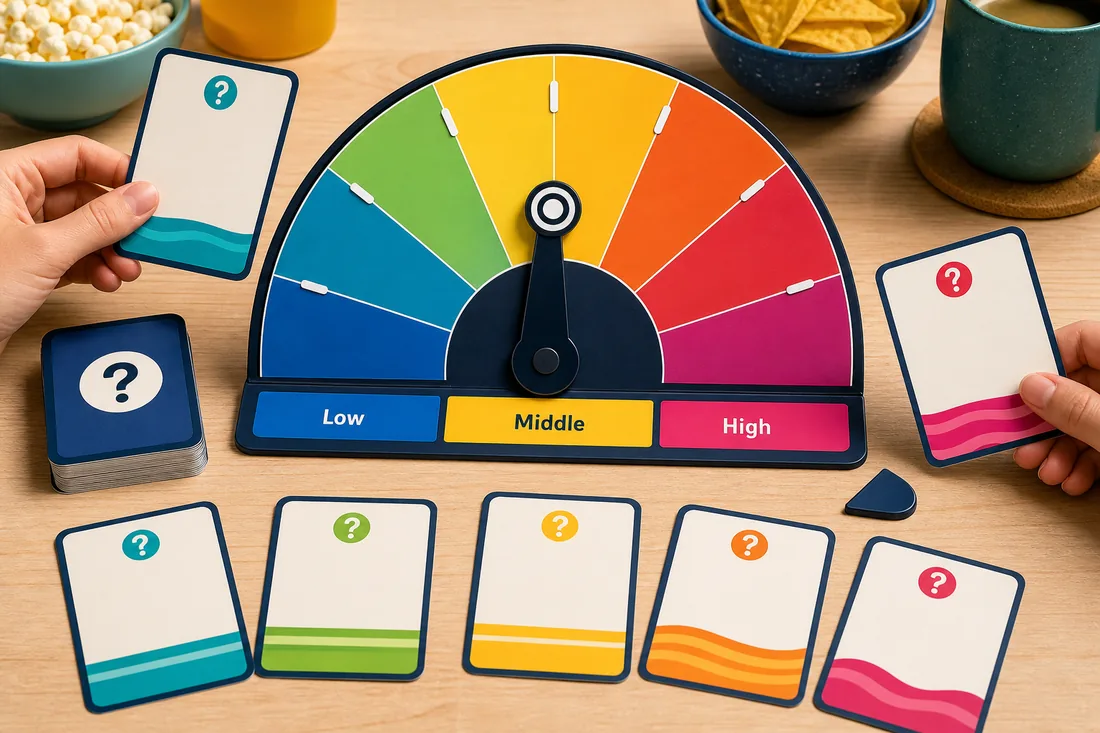
Editorial illustration of Wavelength game questions around a colorful spectrum dial
Wavelength questions work best when the clue can reasonably land at several places on the same spectrum.

How to Use These Questions in a Round

1
Pick a Scale
Choose one question from the list, such as "forgettable to iconic" or "safe bet to wild risk."
2
Hide the Target
The Psychic sees the target on the online board while the guessers look away or wait off-screen.
3
Give One Clue
The clue should match the target zone without naming a number, pointing, or explaining the answer.
4
Debate the Middle
The guessing team talks through why the clue might sit low, high, or near the center.
5
Place the Needle
Move the dial once the team has a consensus. The Psychic should stay quiet after the clue.
6
Reveal and Rotate
Score the round, laugh about the disagreement, and switch to the next Psychic.
Simple host script: "The scale is left side to right side. The Psychic gets one clue. The team can debate examples, context, and vibes, but the Psychic cannot coach the guess after speaking."

Target-Zone Examples for Better Clues

The same Wavelength question can feel easy or difficult depending on the hidden target. When the target is near the left or right edge, the Psychic can choose a clue most people would agree on. When it is near the middle, choose something with context. The goal is not to be cryptic; the goal is to be calibrated.

Example scale: harmless to unforgivable

Low target Forgetting to reply for one afternoon.
Middle target Cancelling plans because a better invite appeared.
High target Spoiling the ending on purpose.
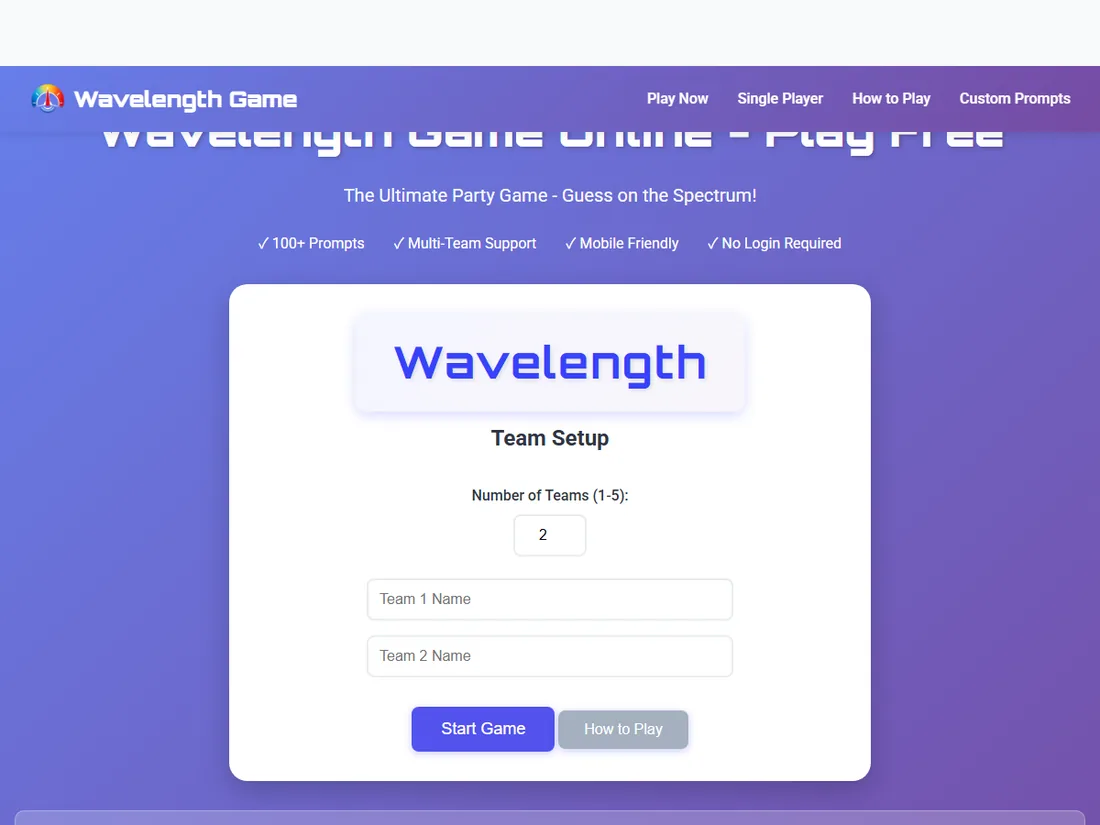
Wavelength Game Online board used to place a question clue on a hidden target
Use the online board for the hidden target, then read one question scale aloud so the team can debate the clue.

Good Wavelength Questions by Category

Use these as ready-to-read question scales. The Psychic supplies the clue after seeing the target. For longer category browsing, jump to the main Wavelength topics page; for a random playable round, use the Wavelength game generator.

Easy Warm-Up Questions

1 Cold to hot
2 Cheap to expensive
3 Tiny problem to huge problem
4 Boring to exciting
5 Easy choice to impossible choice
6 Normal snack to elite snack
7 Quiet room to chaotic room
8 Bad idea to brilliant idea
9 Too early to too late
10 Mildly annoying to deeply annoying
11 Casual outfit to formal outfit
12 Small win to life-changing win
13 Everyday object to luxury item
14 Safe bet to risky bet
15 Forgettable to unforgettable
16 Bad smell to amazing smell
17 Low effort to high effort
18 Slow day to busy day
19 Common skill to rare talent
20 Weak excuse to perfect excuse

Funny Party Questions

21 Barely embarrassing to impossible to recover from
22 Normal text to unhinged text
23 Mildly cursed to fully cursed
24 Bad karaoke song to perfect karaoke song
25 Tiny red flag to giant red flag
26 Harmless prank to friendship-ending prank
27 Bad party guest to legendary party guest
28 Awkward silence to iconic pause
29 Reasonable fear to ridiculous fear
30 Normal hobby to suspicious hobby
31 Low-drama story to reality-TV drama
32 Bad first date to great first date
33 Minor lie to villain behavior
34 Boring nickname to perfect nickname
35 Casual apology to Oscar-worthy apology
36 Mild inconvenience to personal attack
37 Normal purchase to impulse-buy disaster
38 Bad photo pose to profile-picture material
39 Slightly smug to unbearable smug
40 Reasonable complaint to dramatic overreaction

Food, Movies, and Pop Culture Questions

41 Worst pizza topping to best pizza topping
42 Bad sequel to better than the original
43 Background character to main-character energy
44 Snack nobody wants to snack everyone fights over
45 Overrated celebrity to underrated celebrity
46 Bad plot twist to perfect plot twist
47 Forgettable song to instant classic
48 Low-stakes villain to terrifying villain
49 Breakfast food to midnight snack
50 Guilty pleasure to genuinely great
51 Bad movie night pick to perfect movie night pick
52 Weak meme to immortal meme
53 Fine restaurant to dream restaurant
54 Minor spoiler to unforgivable spoiler
55 Background music to dance-floor emergency
56 Bad remake to surprisingly good remake
57 Bland dessert to perfect dessert
58 Forgotten trend to trend that should return
59 Weak superpower to unbeatable superpower
60 Bad game-night food to essential game-night food

Work-Safe and Team-Building Questions

61 Low-priority task to urgent task
62 Small meeting to meeting that should be an email
63 Quiet teammate to natural leader
64 Bad icebreaker to useful icebreaker
65 Easy deadline to impossible deadline
66 Minor typo to serious typo
67 Low-focus work to deep-focus work
68 Risky shortcut to smart shortcut
69 Casual update to major announcement
70 Weak brainstorm idea to breakthrough idea
71 Easy client request to nightmare request
72 Useful feedback to too much feedback
73 Small celebration to team holiday
74 Mildly confusing process to impossible process
75 Low-energy Monday to productive Monday
76 Optional detail to critical detail
77 Fine presentation to unforgettable presentation
78 Helpful reminder to micromanaging
79 Quick decision to decision that needs a meeting
80 Simple project to project with hidden traps

Friends, Couples, and Close-Group Questions

81 Tiny green flag to perfect green flag
82 Casual hangout to core memory
83 Reasonable boundary to too strict
84 Bad gift to perfect gift
85 Low-maintenance friend to high-maintenance friend
86 Harmless secret to serious secret
87 Minor pet peeve to relationship dealbreaker
88 Casual compliment to unforgettable compliment
89 Bad vacation idea to dream vacation idea
90 Normal couple behavior to too much couple behavior
91 Easy favor to huge favor
92 Forgivable mistake to hard-to-forgive mistake
93 Low-effort date to perfect date
94 Fine roommate habit to unbearable roommate habit
95 Casual inside joke to group lore
96 Small surprise to overwhelming surprise
97 Normal text response time to suspicious response time
98 Mild roast to too personal
99 Okay advice to life-saving advice
100 Small tradition to sacred tradition

Hard-Mode Debate Questions

101 Harmless to unforgivable
102 Technically legal to morally wrong
103 Traditional to futuristic
104 Overhyped to underappreciated
105 Pure luck to pure skill
106 Selfish to selfless
107 Cowardly to brave
108 Art to not art
109 Waste of time to worth every second
110 Private problem to public problem
111 Minor rule bend to obvious cheating
112 Nostalgic to outdated
113 Healthy confidence to arrogance
114 Smart compromise to giving up
115 Funny coincidence to suspicious coincidence
116 Helpful technology to too much technology
117 Necessary risk to reckless risk
118 Underdog to favorite
119 Fair punishment to way too harsh
120 Simple truth to complicated truth
Question Types and When to Use Them

Question Type Best For Example Scale Watch Out For
Concrete New players, family games, short rounds Cheap to expensive Too factual if the clue has an obvious answer
Funny Parties, close friends, low-stakes debate Mildly cursed to fully cursed Inside jokes that only half the room understands
Social Friends, couples, game-night groups Tiny red flag to giant red flag Real accusations or personal conflict
Work-safe Remote teams, classrooms, club events Useful feedback to too much feedback Topics that feel like performance reviews
Abstract Experienced players who enjoy debate Art to not art Too many abstract rounds in a row can slow the game

How to Write Your Own Wavelength Questions

Start with two ends that are clearly opposite but not purely factual. "Short to tall" works, but it often becomes a measurement exercise. "Low-key to attention-seeking" gives the Psychic more room to choose a clue and gives the team more room to argue. A good test is whether you can imagine examples at 20%, 50%, and 80% on the scale.

Keep the wording short. The table should not have to parse a paragraph before playing. If your scale needs too much explanation, it is probably a theme, not a single question. Move the explanation into your host intro and keep the actual question readable. For deeper custom-deck building, use the custom Wavelength prompts guide.

Quick quality check: a question is ready when both ends are clear, the middle is debatable, the clue can be one word or phrase, and nobody needs private context to understand the round.

FAQ

What are good Wavelength questions?
Good Wavelength questions are spectrum pairs with a clear left side, a clear right side, and a debatable middle. Examples include overrated to underrated, harmless to unforgivable, boring to exciting, and safe bet to wild risk.
Are Wavelength questions the same as prompts?
Players often use the words interchangeably. A prompt is usually the full spectrum pair. A question is the way the host frames that pair for the round and the clue the Psychic gives after seeing the hidden target.
How many questions do I need for one game?
For a casual 20-minute game, prepare 10 to 15 questions. You may not use all of them, but having extras lets the host skip a topic that does not fit the room.
Can I use these questions with the online Wavelength game?
Yes. Open the online board, read one scale from this page, let the Psychic see the target, and use the question as the theme for that round.
What makes a Wavelength question bad?
Bad questions are too factual, too private, too long, or too obvious. If everyone would place the clue in the same spot instantly, the round will not create much discussion.

Related Wavelength Pages