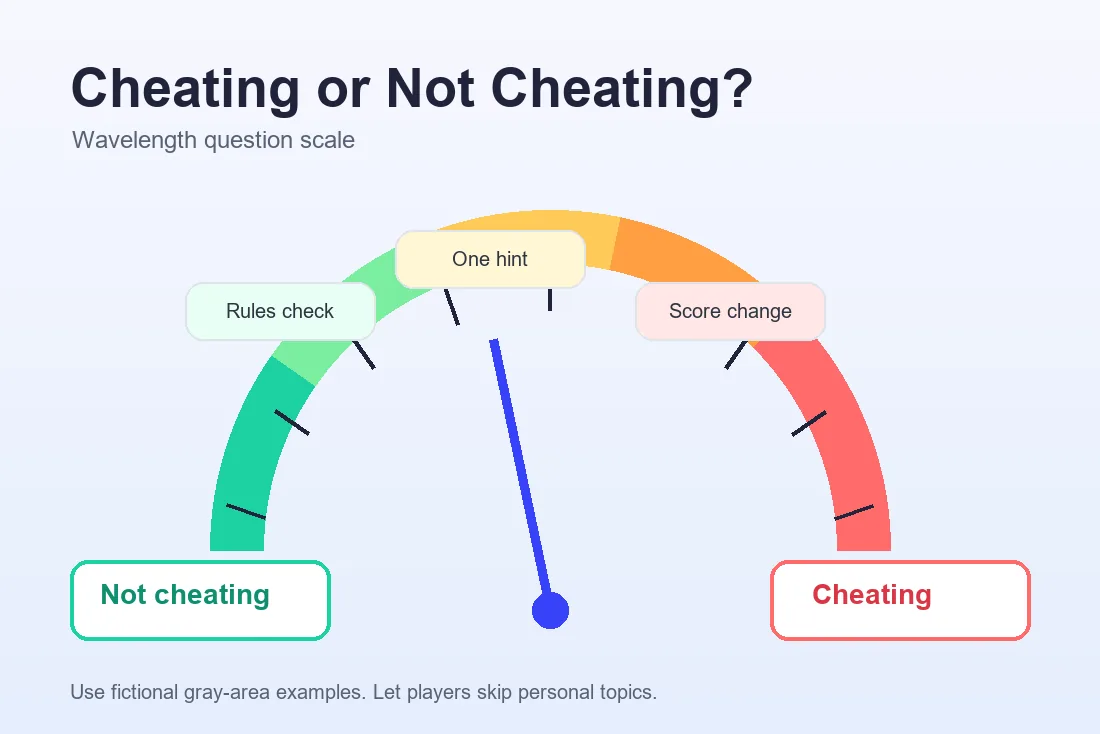
120 Wavelength Cheating or Not Cheating Questions
Read any item below as the Psychic's clue. Your team should decide where it belongs between not cheating and cheating. For a smoother game, choose one category at a time instead of jumping from video games to dating to school in the same round.
Games and Competitions
1 Reading the rulebook during your turn.
2 Counting cards in a casual family card game.
3 Watching a strategy video before a board game night.
4 Looking up one hint in a puzzle game.
5 Using a walkthrough for the final boss.
6 Choosing the same answer as the smartest player.
7 Pretending not to know a trivia answer to lower expectations.
8 Secretly practicing a party game before game night.
9 Pausing a reaction-time game to think.
10 Memorizing all the cards in the deck.
11 Making a fake alliance in a strategy game.
12 Changing your score after everyone looks away.
13 Using a calculator for a math-based board game.
14 Asking someone outside the game for advice.
15 Reading your teammate's face after they promised not to react.
16 Picking the easiest house rule for yourself.
17 Googling an answer in online trivia.
18 Using a chess engine during a casual match.
19 Studying old questions before pub quiz night.
20 Saying "misclick" after a bad move.
Dating and Relationship Gray Areas
21 Liking an ex's vacation photo.
22 Rewatching a show you promised to watch together.
23 Saving a dating app profile "just to laugh at it."
24 Having a secret celebrity crush list.
25 Texting an ex happy birthday.
26 Keeping an inside joke with someone your partner dislikes.
27 Saying you are "basically single" before a breakup is official.
28 Going to dinner one-on-one with an old crush.
29 Flirting for a free dessert.
30 Asking a friend to write your dating app bio.
31 Hiding that you saw a message notification.
32 Calling someone your "work spouse."
33 Keeping a gift from an ex in a drawer.
34 Practicing a breakup speech with a friend.
35 Having a fake wedding board on Pinterest.
36 Pretending you have never seen a movie on a date.
37 Letting someone buy you a drink and then leaving.
38 Asking an AI to write a romantic text.
39 Watching your partner's favorite show with someone else.
40 Sharing a playlist made by an ex.
School, Work, and Everyday Life
41 Reading the book summary instead of the book.
42 Using last year's notes for the same class.
43 Asking a friend what was on the quiz.
44 Copying the format of a coworker's presentation.
45 Using a template and pretending you made it from scratch.
46 Letting spellcheck fix every sentence.
47 Asking an AI for brainstorming help.
48 Asking an AI to write the whole assignment.
49 Taking credit for a group idea.
50 Saying you were "almost done" when you had not started.
51 Using a coupon code meant for new customers.
52 Returning an outfit after wearing it once.
53 Taking the last slice after asking "does anyone want it?" too quietly.
54 Saying traffic was bad when you just left late.
55 Pretending you did not see a group chat message.
56 Using someone else's streaming password.
57 Cutting in line because your friend is already there.
58 Taking office snacks home for the weekend.
59 Saving a parking spot with a bag.
60 Joining a meeting late with the camera off.
Food, Sports, and Pop Culture
61 Using a recipe in a cooking contest.
62 Buying dessert and pretending it is homemade.
63 Adding extra cheese after the cook-off timer ends.
64 Googling "best fantasy football picks" before a draft.
65 Using a professional bracket prediction for March Madness.
66 Watching spoiler reviews before guessing a movie twist.
67 Reading subtitles in a "guess the lyric" game.
68 Listening to a song once before music trivia starts.
69 Wearing lucky socks for every game.
70 Distracting your opponent with snacks.
71 Picking a karaoke song you secretly practiced.
72 Saying you have never played mini golf before.
73 Searching a movie ending during intermission.
74 Voting for your friend's cake in a bake-off.
75 Using a sports stat app during a debate.
76 Copying a famous chef's plating exactly.
77 Calling a board game "luck-based" after losing.
78 Wearing noise-canceling headphones during charades.
79 Choosing a team because you know the referee.
80 Pretending you guessed the plot twist.
Spicy but Still Playable
81 Keeping a secret backup plan for New Year's Eve.
82 Saying "I was just being nice" after obvious flirting.
83 Deleting a message because it would be misunderstood.
84 Using a friend's joke on a first date.
85 Taking two personality tests until you get a better result.
86 Pretending not to know someone at a party.
87 Leaving someone on read to seem busier.
88 Saying "we should hang out sometime" with no intention.
89 Asking a mutual friend to report what someone said.
90 Keeping a secret ranking of your friends' partners.
91 Using a fake excuse to leave a boring party.
92 Pretending a text was sent by accident.
93 Screenshotting a message for the group chat.
94 Saying you "forgot" plans you wanted to avoid.
95 Reusing the same thoughtful compliment on three people.
96 Hiding your screen when someone walks by.
97 Pretending to like a friend's favorite band.
98 Making a playlist for two different people.
99 Saying "I never check social media" while checking constantly.
100 Asking someone else to send the risky text.
Family-Friendly Alternatives
101 Peeking during hide-and-seek.
102 Moving a puzzle piece closer to the right spot.
103 Asking for help on a crossword.
104 Looking at the answer key after one try.
105 Picking the biggest cookie before anyone else sees.
106 Saying "best two out of three" only after losing.
107 Looking at someone else's art project for inspiration.
108 Practicing before a talent show.
109 Asking a parent for a hint during homework.
110 Reading the back of the box before guessing the toy.
111 Hiding the best game piece from your sibling.
112 Changing the rules halfway through tag.
113 Choosing the easiest chore first.
114 Looking at a friend's drawing during Pictionary.
115 Whispering the answer to your teammate.
116 Sneaking an extra marshmallow into hot chocolate.
117 Moving closer to the target in a throwing game.
118 Asking "what letter does it start with?"
119 Reading the last page of a mystery book first.
120 Blaming a bad move on the dog.