Wavelength for 2 Players:
Best Rules & Setup

Use a cooperative format, swap the Psychic role every turn, and keep the discussion at the center of the game.

Co-op First Fast Setup Tabletop or Online Shared Score

Can You Play
Wavelength With
2 Players?

Yes, you can play Wavelength with 2 players. The cleanest format is cooperative: one player becomes the Psychic, gives one clue, and stays quiet while the other player places the needle. Reveal the target, record the shared score, and switch roles for the next turn. This keeps both people involved without pretending that a two-person game has the same debate energy as a full party.

The official Wavelength App FAQ lists 2–10 players and describes the app as fully cooperative. For a physical edition, check the player-count line and rulebook that came with your copy; the format on this page is a practical two-player co-op setup that works well for a quick game night, a couple, or a remote call.
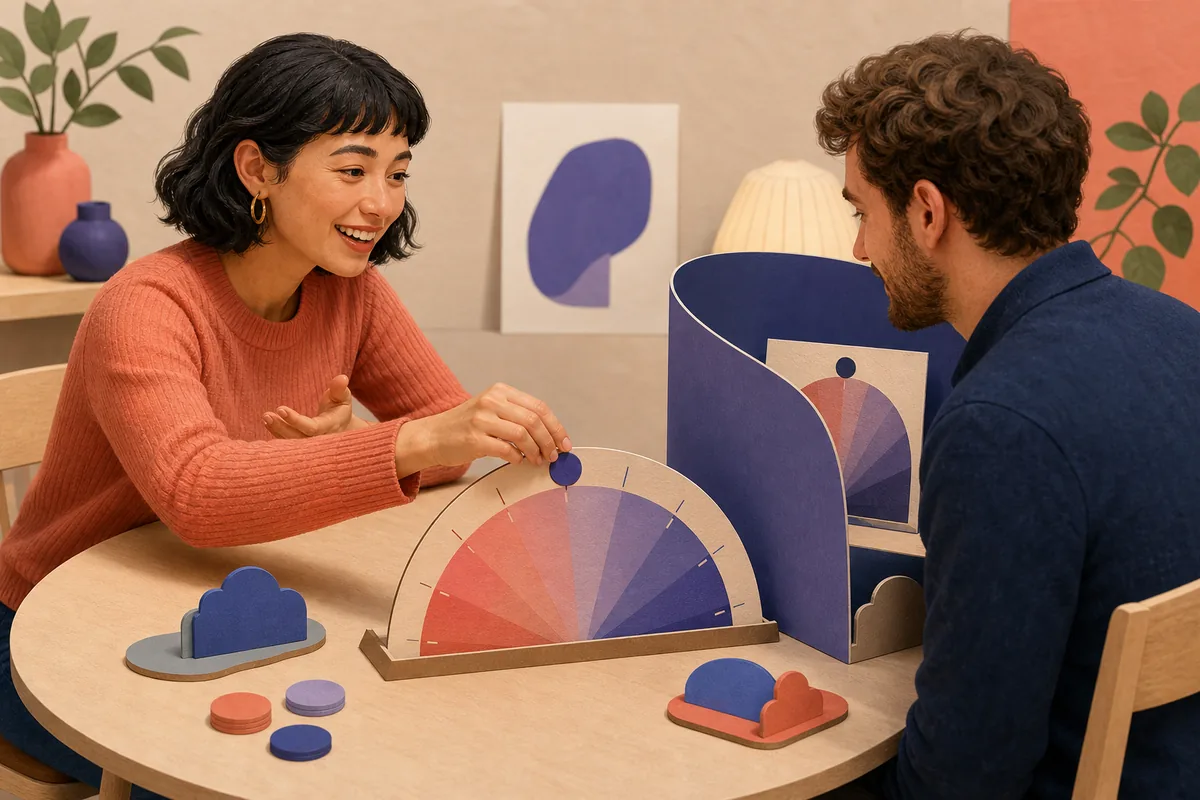
Two players discussing a clue beside a colorful Wavelength spectrum dial in a cooperative game
Editorial concept illustration of a cooperative two-player round; it is not an official product screenshot.

Best Wavelength 2 Player Setup

1
Choose Co-op
Use one shared score and try to improve over a fixed number of rounds. Co-op gives two players a reason to discuss instead of arguing over a winner.
2
Pick the Psychic
The Psychic privately sees the target area, reads the spectrum, and prepares one clue that points toward the target without naming the exact spot.
3
Hide the Target
Cover the target or hide the screen before the clue is discussed. The guesser should not receive accidental hints from the Psychic's face or hands.
4
Discuss and Guess
The guesser explains their interpretation and places the marker. The Psychic listens without correcting, coaching, or reacting to the position.
5
Reveal and Switch
Reveal the target, add the points to the shared total, then swap roles. The new Psychic should get a fresh clue and a clean turn.
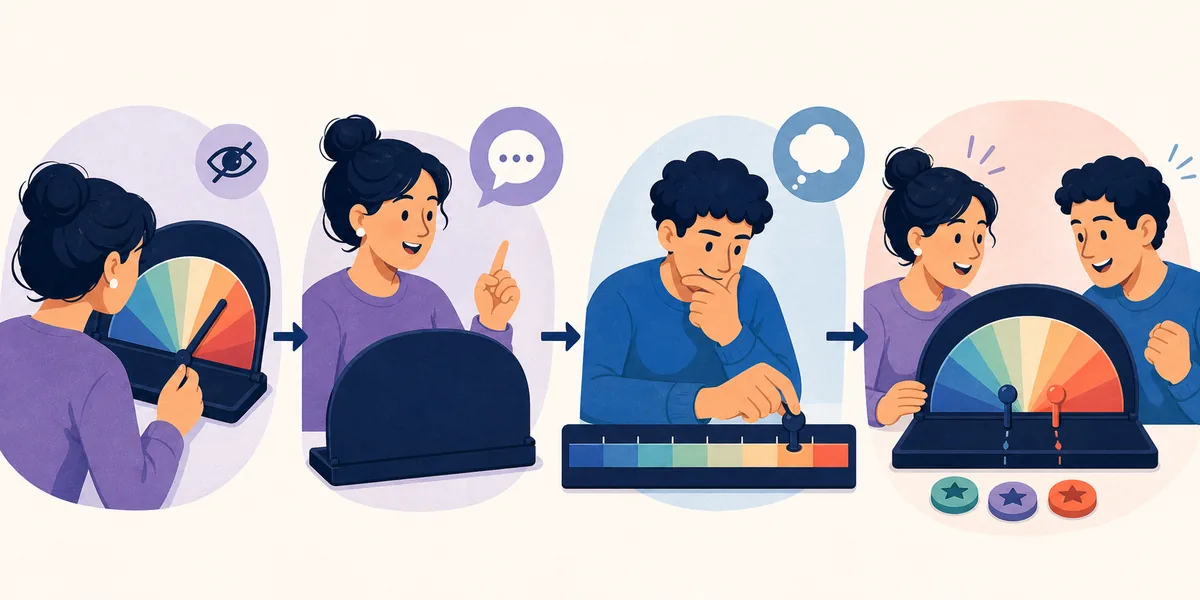
Four-step editorial illustration showing a two-player Wavelength round from hidden target to reveal
The two-player rhythm is simple: see, clue, guess, reveal, then change roles.

How to Play Wavelength
With 2 Players

A two-player round should feel like a conversation with a hidden answer, not like a speed test. Give the guesser enough time to explain what the clue means on the spectrum, but set a soft limit so the same clue does not become a twenty-minute debate. Around 30–60 seconds per guess is a useful starting point.

Use this turn sequence for both a physical board and the online version:

Moment Psychic does Guesser does Fair-play check
Target view Looks at the hidden zone and chooses a clue. Looks away or waits behind the cover. No peeking at the target or the Psychic's notes.
Clue Gives one word or short phrase. Asks what the clue means along the scale. No second clue, pointing, or “warmer/colder” hint.
Guess Stays neutral while the marker moves. Explains the final position and locks it in. Choose the position before revealing the target.
Reveal Reveals the zone and records the points. Reviews why the clue landed there. Switch roles before starting the next round.

Co-op vs. 1v1: Which Format Is Better?

Two people can keep separate scores if they want a competitive challenge, but co-op is the best default for Wavelength for 2 players. The game is built around interpreting another person's mental map. A shared score makes the discussion more generous and keeps a single unlucky clue from deciding the whole session.

Format How it works Best for Watch out for
Co-op One shared score; swap Psychic and guesser every round. Couples, friends, first-time players, remote calls. Do not make the target too easy just to chase a high score.
1v1 house rule Each player scores only when they are guessing or gives the clue for their side. Players who want a winner after a short match. It can feel less social and makes the game more swingy.
Timed challenge Play 10 rounds and try to beat your previous shared total. Repeat sessions and quick online practice. Compare scores only when prompts and scoring are similar.

Scoring and Game Length
for Two Players

If you are using the scoring on this site, keep the familiar 5-point bull's-eye, 3-point close zone, 1-point near zone, and 0-point miss. For a physical copy, use the scoring printed in that edition's rules. The important part is consistency: agree on the scoring before the first clue and do not change the target after the guess.

For most pairs, 8–10 rounds is enough for a satisfying session. A five-round warmup takes about 10–15 minutes; ten rounds gives both players several chances to be the Psychic and the guesser. If the discussion is especially good, keep the score and continue rather than forcing a winner after only two or three turns.

Quick Warmup
Play 5 rounds with obvious spectra such as Cold to Hot or Boring to Exciting.
Normal Session
Play 8–10 rounds and switch roles after every reveal for a balanced co-op score.
Best-of-Three
Play three short games with a different prompt style in each one and compare shared totals.

Prompts That Work Well With Two Players

With only two people, choose a spectrum that gives both players room to disagree. Everyday topics are usually better than references that only one person knows. Start with a clear scale, then move toward more personal or abstract prompts once you understand how the other player thinks.

  • Low-energy morning to fully awake: easy to explain and useful for a warmup.
  • Safe choice to wild risk: creates discussion without requiring specialist knowledge.
  • Bad movie to perfect movie: good when both players share similar movie references.
  • Small treat to dream reward: works for food, shopping, and travel conversations.
  • Normal habit to suspicious habit: fun for close friends, but skip it if it feels too personal.
  • Helpful technology to too much technology: useful for remote work or tech-focused pairs.

For a larger bank of ready-to-read scales, open the 200+ Wavelength prompts, topics, and ideas. If you want to build a prompt around a shared memory, use the custom prompts guide and test whether the middle of the spectrum is still debatable.

Online Wavelength for Two Players

The online version is useful when two people are in different places. Open the free Wavelength game, agree on who is the Psychic, and share only the board view that the guesser is supposed to see. The Psychic can look at the hidden target first, then the guesser takes over the marker after the target is covered.

For a simple remote call, keep both players in the same voice room and use one person as the host. Say “target hidden” before the clue, give the guesser 30–60 seconds to talk, then reveal the target and record the score. If screen sharing makes the hidden phase awkward, use a private handoff: the Psychic looks first, the host hides the target, and only then does the guesser move the needle.

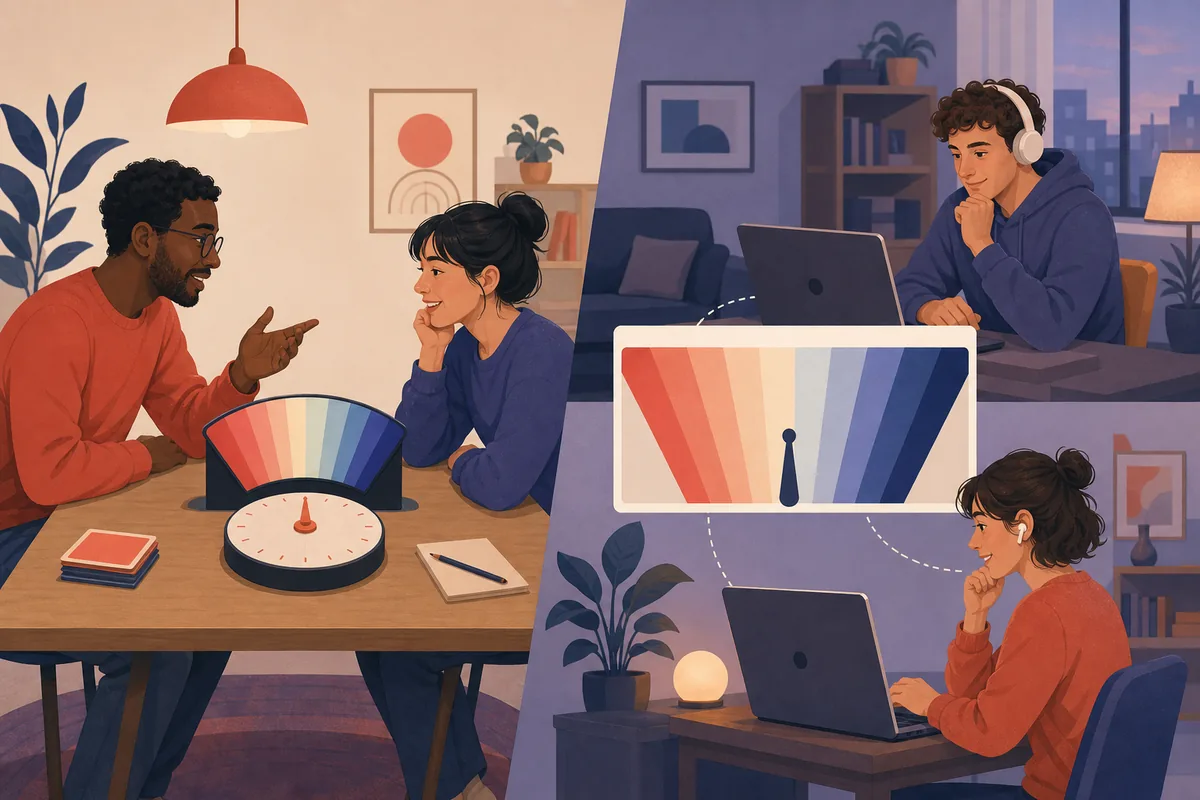
Editorial comparison of two-player Wavelength played at a table and through a shared browser board
Editorial concept visual comparing an in-person table with a remote browser setup; it is not an official app screenshot.

If you are playing alone rather than with a second person, switch to the single-player Wavelength practice guide. If your group grows to four, the Wavelength 4 players setup explains how to move from co-op into a 2v2 format.

Common Two-Player Mistakes

Giving a second clue. Two people often want to help each other, but extra hints remove the interpretation that makes Wavelength work. If the clue misses, learn from the reveal and switch roles.

Letting facial reactions guide the guess. A raised eyebrow or laugh can be as revealing as a spoken hint. The Psychic should stay neutral once the clue is given.

Using a scale with no middle. If the answer is always obviously left or right, there is nothing to discuss. Choose prompts where a few examples could reasonably sit at 30%, 50%, or 70%.

Making the game a memory test. Do not choose a clue that only one player understands. Shared everyday references usually create better two-person rounds than obscure trivia.

Comparing the wrong scores. A five-round co-op warmup is not comparable to a ten-round game with difficult prompts. Record the round count, prompt style, and scoring rule if you want to beat a previous score.

Wavelength for 2 Players FAQ

Is Wavelength good with 2 players?
Yes. It works best as a cooperative conversation game: one player gives the clue, the other guesses, and both share the score. It is quieter than a party game but still gives you the core mind-reading challenge.
What is the best Wavelength 2 player setup?
Use one shared score, rotate the Psychic role after every reveal, and play 8–10 rounds. Keep the target hidden from the guesser and allow about 30–60 seconds for discussion.
Can you play Wavelength with 2 players online?
Yes. Use a shared browser board and a voice call. The Psychic views the target first, the host hides it, and the other player moves the marker before the target is revealed.
Should two players compete or cooperate in Wavelength?
Cooperation is the better default because it keeps the focus on interpreting the clue. A 1v1 score can work as a house rule when both players specifically want a winner.
What are good Wavelength prompts for two people?
Start with shared, flexible scales such as safe choice to wild risk, bad movie to perfect movie, or low-energy morning to fully awake. Avoid prompts that depend on private knowledge or a single correct fact.

Sources and Visual Notes

For current player-count and cooperative-format details, check the official Wavelength App FAQ. For the physical game, compare the edition-specific information on the official CMYK Wavelength product page and your own rulebook.

The three images on this page are clearly labeled editorial concept visuals created for explanation. They are not official Wavelength screenshots, product photography, or evidence of a particular app interface.

Ready for a Two-Player Round?

Open the free online board, choose a prompt, and see how closely you can read each other's clues.

Play Wavelength Online