
How to Play Wavelength Without the Board Game

A practical paper, phone, and browser setup for the same hidden-target conversation

No Physical Board5-Step Setup2–12 Players
Quick answer: Yes, you can play Wavelength without the physical box. You need a spectrum with two opposite ends, a hidden target that only the Psychic sees, one clue, a team discussion, and a reveal method. Paper and a folded note work for an in-person group; a private phone screen or this site's free browser version is easier for remote play.
Friends discussing a paper spectrum with a phone while playing Wavelength without the physical board game
AI-generated editorial illustration for this guide. It shows the no-board concept and is not an official Wavelength screenshot or product image.

How to play Wavelength without the board game is mostly a question of fair information flow. The Psychic must see the target before giving a clue, the guessing team must not see it, and everyone must agree on the spectrum before the guess. Once those three conditions are protected, the physical wheel is helpful but not essential.

This guide gives you a fast no-box method, a paper-and-phone method, a remote browser method, scoring options, starter prompts, and fixes for the mistakes that make homemade rounds feel unfair. If you own the physical game and want the edition's standard rules, start with our complete Wavelength rules guide instead.
What you needSimple substituteWhy it matters
A spectrumPaper, whiteboard, or shared screenPlayers need to see the two endpoints and the possible positions between them.
A hidden targetFolded note, private phone screen, random number, or browser targetOnly the Psychic should know where the scoring zone is before the clue.
A markerCoin, token, pencil mark, or on-screen needleThe team needs one final guess that can be revealed and scored.
A promptExisting card, custom spectrum, or a starter idea from the prompts listTwo clear opposites make the clue discussion easier to understand.

The Fastest No-Board Method: Use a Phone or Browser

If you want to start immediately, use one device as the hidden-target host. Open the free Wavelength game online, choose the spectrum, let the Psychic look at the target, and then hand the guessing role to the team. Everyone can discuss the clue in the same room or over Zoom, Discord, or another voice call.

The important fairness rule is to separate the hidden phase from the guessing phase. Do not leave the target visible while the team is deciding, and do not let the Psychic add a second clue after the discussion starts. If one host controls the screen, say “target hidden” before the clue and “guess locked” before the reveal.

Best remote setup: keep the board in one shared window, keep the Psychic's target view private during setup, and let the host move or confirm the final marker only after the team agrees. A short 30–60 second discussion timer keeps the round lively without removing the conversation that makes Wavelength fun.

How to Set Up a Paper Wavelength Round in 3 Minutes

For an in-person group without the box, paper is enough. Use a long sheet if you have one, or draw the spectrum across a piece of notebook paper. The target does not need to look like the official wheel; it only needs a consistent position that can be hidden, guessed, and revealed.

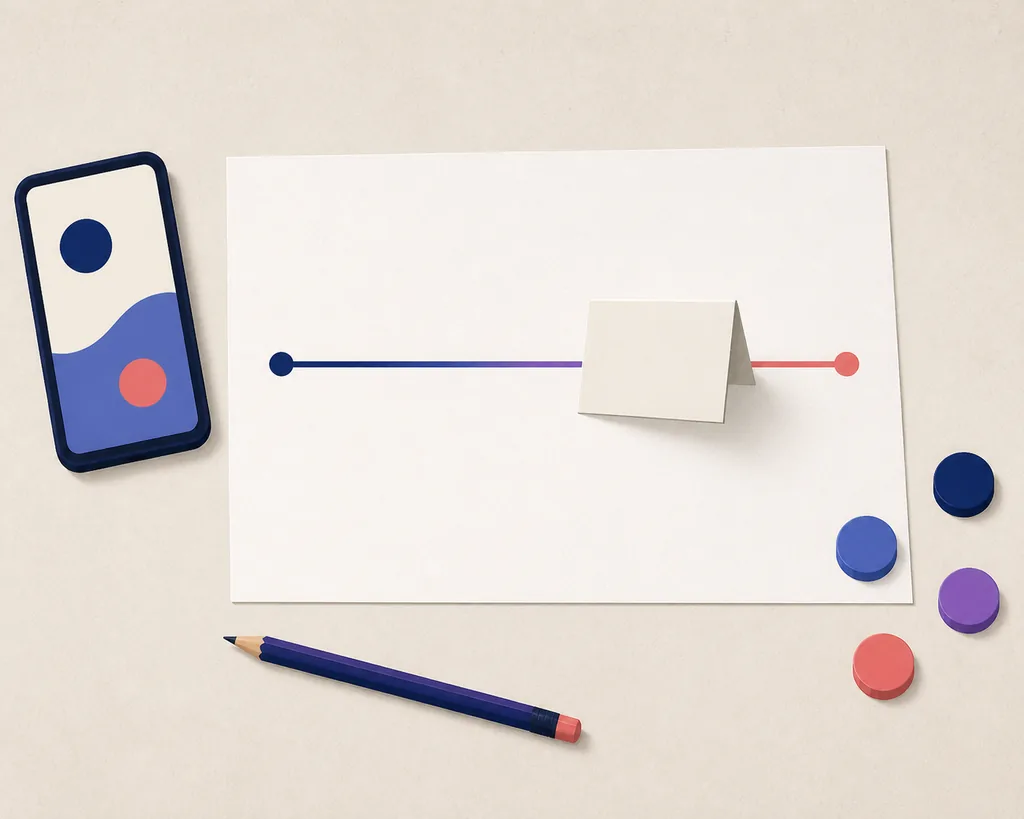
Paper spectrum, folded note, phone, pencil, and tokens arranged for a no-board Wavelength setup
AI-generated editorial illustration of a paper-and-phone setup. The visual is explanatory, not an official game component or screenshot.
1. Draw the scaleWrite one opposite concept at each end, such as Cold and Hot or Quiet and Loud.
2. Hide a targetMark a position on a folded note or private screen. The Psychic looks first; the team does not.
3. Give one clueThe Psychic gives one word or short phrase that should point toward the target's position.
4. Lock the guessLet the team discuss, then place one coin, pencil mark, or token where they agree.
5. Reveal and scoreOpen the note, compare the positions, record the points, and rotate the Psychic role.

Keep the line visually continuous. The center is not automatically the correct answer, and the endpoints should represent real opposites rather than two unrelated topics. If the group cannot tell what “middle” means, rewrite the spectrum before starting the round.

Four Fair Ways to Hide the Target Without the Wheel

MethodHow it worksBest forFair-play note
Folded noteDraw the target on a small note, fold it, and let only the Psychic open it.In-person groups with paper and a pencil.Use a fresh note each round so nobody can infer the target from the fold.
Private phoneUse a random position or a private image, then show the spectrum to the team without the target.Groups that already have two phones or a host device.Turn the screen away during the clue and lock the guess before showing it again.
Number scaleChoose a number from 1–10 or 1–100 and map it to the spectrum.Classrooms, fast rounds, and remote calls.Agree whether 1 and 10 are endpoints and whether rounding is allowed.
Browser versionUse the site's interactive board to generate a target, clue prompt, and guess position.Remote friends or anyone who wants automatic reveal and score support.Keep the hidden-target view private until the Psychic has delivered the clue.

There is no single “correct” homemade target method. The best one is the method your group can explain in one sentence and repeat consistently. If you switch between paper, phone, and browser formats during the same session, announce the change so everyone knows whether the target is a position, a number, or an on-screen zone.

The No-Board Wavelength Turn: Clue, Debate, Reveal

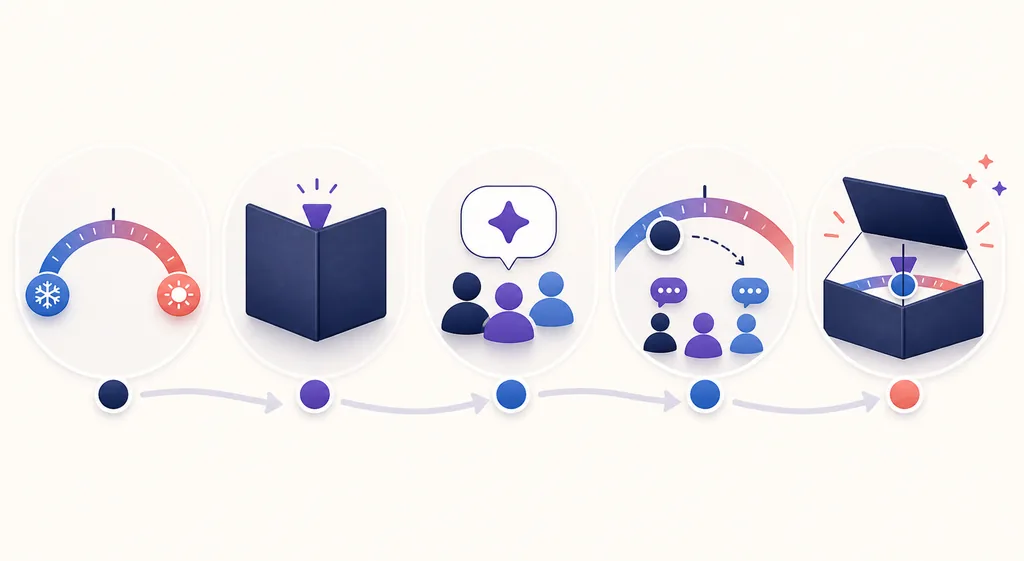
Five-icon flow showing spectrum choice, hidden target, clue discussion, marker placement, and reveal for Wavelength
AI-generated editorial step-flow illustration. The five visual moments correspond to the written round sequence below and are not a reproduction of the official interface.

A no-board round should still preserve the game's central tension: the Psychic knows the target but cannot describe it directly, while the team must translate one clue into a position on a continuous scale. The debate is not a quiz with one obvious fact. It is a shared attempt to estimate how the clue fits the spectrum.

MomentPsychicGuessing teamHost
Before the clueChecks the hidden target and keeps it private.Looks only at the two endpoints.Confirms that the target is hidden and the spectrum is clear.
ClueGives one word or short phrase.Listens without asking for a second clue or a narrower hint.Repeats the clue exactly if someone missed it.
DiscussionStays neutral and does not react to guesses.Explains where the clue feels low, middle, or high on the scale.Uses a timer if the group starts circling the same argument.
GuessWaits until the team chooses one position.Places one marker and treats it as final.Records the position before the target is revealed.
RevealShows the target and explains the intended reading if useful.Compares the interpretation with the target.Scores the round and rotates the Psychic.

Scoring a Wavelength Game Without the Official Pieces

Use the scoring zones your group agrees on before the first clue. This site's browser game uses a simple 5–3–1–0 model: the center bull's-eye is 5 points, the close zones are 3, the near zones are 1, and a miss is 0. If you are using a different edition or a house rule, keep the same scoring throughout the session rather than changing it after a reveal.

ResultSuggested pointsPaper version
Bull's-eye5Draw a narrow center band and mark it before the game starts.
Close3Draw one band on each side of the center.
Near1Use the next outer band if your group wants partial credit.
Miss0Any marker outside the scoring bands receives no points.
Do not over-measure: the point of a no-board round is a shared, repeatable estimate. A ruler can help you draw even bands once, but the discussion should decide the final marker—not a debate over whether it is one millimeter inside the line.

Best No-Board Formats by Group Size

The no-board format works best when the target method matches the group. Two people need a cooperative rhythm; a larger party needs a host who protects the clue and keeps the discussion moving.

GroupRecommended formatPractical adjustment
2 playersCooperative, alternating Psychic and guesserUse 5–10 rounds and a shared score. Our 2-player guide covers role rotation and remote setup.
3–4 playersOne active Psychic with a small guessing teamRotate the Psychic every round so one person does not control every target.
6–8 playersTwo teams with one host or scorekeeperSet a 30–60 second discussion limit so every team gets a fair number of turns.
9–12 playersTwo large teams or short timed roundsAsk quieter players for an initial guess before the loudest debate begins.
Remote groupOne browser host plus a voice callUse private handoff or screen sharing carefully; never expose the target during discussion.

Starter Wavelength Topics for a Paper or Phone Game

Start with endpoints everyone can understand without specialist knowledge. The best no-board topics create room for a middle position and do not depend on one player's private reference. For a larger bank, see our Wavelength game questions and 200+ prompts and topics.

  • Quiet ↔ Loud: a simple warm-up for a room that is still settling in.
  • Safe choice ↔ Wild risk: useful for mixed groups because the middle is easy to debate.
  • Bad movie ↔ Great movie: works when the team enjoys explaining taste rather than recalling trivia.
  • Small treat ↔ Dream reward: flexible for food, travel, shopping, or everyday habits.
  • Helpful technology ↔ Too much technology: a good remote-work or classroom spectrum.
  • Normal habit ↔ Suspicious habit: funny for close friends, but skip it if the group dislikes personal prompts.
  • Easy conversation ↔ Deep conversation: useful for couples, new friends, or team-building sessions.
  • Forgettable party ↔ Legendary party: gives the host room to ask for stories after the reveal.

Common No-Board Mistakes and Quick Fixes

ProblemWhy it hurts the roundFix
The target is visibleThe team is no longer interpreting a clue; it is reading the answer.Fold the note, use a private screen, or let the Psychic inspect the target before sharing the board.
Endpoints are not true oppositesThe middle has no shared meaning, so every guess feels arbitrary.Rewrite the spectrum with two clear concepts before the clue.
The Psychic gives extra hintsLater comments reveal the target instead of testing the first clue.Allow one clue and neutral reactions only until the guess is locked.
No final marker is recordedThe group can move the guess after seeing the target.Take a photo, write down the position, or have the host confirm “locked” before revealing.
Scoring changes mid-gameTeams cannot compare rounds fairly.Draw the scoring bands or write the point rules before round one.
The discussion has no limitOne round consumes the whole game night and louder players dominate.Use a 30–60 second timer, then ask for a final position.

How to Play Wavelength Without the Board Game FAQ

Can you play Wavelength without the board game?
Yes. Draw a two-ended spectrum, hide a target from the guessing team, give one clue, place one final marker, and reveal the target. A folded note is enough for an in-person round; a phone or browser is easier for remote play.
What is the easiest way to play Wavelength without the physical box?
Use a private phone screen or the free browser version. The Psychic sees the target, the team discusses the clue, and the host records the locked guess before revealing the target.
Is a paper version of Wavelength fair?
It can be fair if the target is hidden, the endpoints are clear, the Psychic gives only one clue, and the final marker is recorded before the reveal. Agree on scoring bands before starting.
How do you create a hidden Wavelength target?
Mark a position on a folded note, choose a random number that maps to the scale, or use a private browser target. The method matters less than preventing the guessing team from seeing it early.
How many people can play a no-board Wavelength game?
Two people can play cooperatively, while four to eight usually gives the best mix of discussion and turn frequency. Larger groups can use two teams and a host with a short timer.
Is the browser version the same as the official Wavelength board game?
It uses the same broad spectrum-and-clue idea, but a browser implementation is not the same physical product. The official box adds its own wheel, screen, cards, and tactile reveal; the browser option is a convenient way to play without those components.

Bottom Line

You do not need the physical Wavelength wheel to create a good round. You need a clear spectrum, a protected hidden target, one clue, a locked guess, and a reveal everyone trusts. Use paper when you want a quick living-room game, a phone when one player can host privately, or the browser version when your group is remote or wants automatic target and score support.

If you want to expand the session after the first round, browse the custom prompts guide for themed spectrums or use the category generator to choose a topic that fits your group.

Sources and Illustration Note